The Witch Tree of Bladel: A Beech Shaped by Legend and Community
A Tree Rooted in Legend
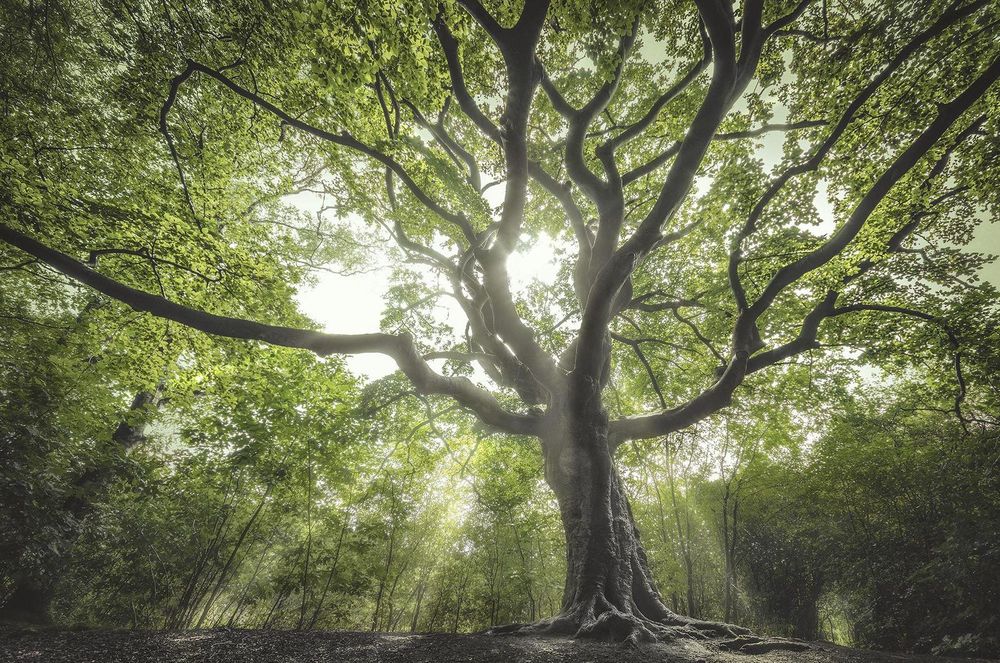
Long before it became a finalist in the European Tree of the Year 2020, the Witch Tree of Bladel was already a source of wonder and whispers in the Dutch region of North Brabant. Estimated to be around 130 years old, this gnarled European beech (Fagus sylvatica) has twisted branches, exposed roots, and a presence so striking that many say it feels almost alive with history.
But what makes this tree truly remarkable is not just its form—it’s the story that has grown with it. According to an age-old legend, this is the last resting place of Zwarte Kaat – Black Kate – a feared woman who once led a band of robbers and smugglers in the Kempen region.
The Legend of Zwarte Kaat
The tale tells of Black Kate’s terror over the countryside. Her gang brought unrest to farms and villages until one fateful day when she stole a newborn child from a nearby homestead and raised him as her own. Years later, the boy escaped and revealed the truth about his dark childhood. Betrayed and exposed, Kate was punished for her crimes and buried deep within the forest.
Instead of a cross, the villagers planted a young beech on her grave. Over generations, that sapling grew—its roots twisting through the soil that once held her—and became the tree people now call the Witch Tree. Its eerie shape and tangled roots remind all who visit that legends, like roots, run deep beneath the surface.
A Living Connection Between Story and Nature
What began as a tale told around village fires has since become a living meeting point of myth, memory, and community. The Witch Tree attracts school groups, families, and walkers who come to learn its story and see its unique form up close. Parents tell their children of Black Kate’s deeds, keeping the legend alive as part of local identity and heritage.
For many in Bladel, the tree is not a symbol of fear, but of connection—between good and evil, between the past and the present, and between people and the landscapes that hold their stories.

From Local Legend to European Icon
Recognition at the European Tree of the Year 2020 brought international attention to what had long been a local treasure. Visitors from across Europe came to see the Witch Tree, not only for its haunting beauty, but also for the timeless message it carries: that nature and myth intertwine to shape how communities understand themselves and their surroundings.
A Story That Still Grows
Today, the Witch Tree of Bladel stands as a reminder that stories, like trees, grow with each telling. Its gnarled roots continue to anchor both soil and imagination, while its branches reach outward—bridging centuries of folklore, landscape, and human wonder.